Cute Baby Tiger, Kawaii Christmas Santa Illustrations
As a brand designer who spends most of my days refining identities for local shops and handmade businesses, I approach every new graphic design asset with a critical eye. It is not enough for an image to be "cute"; it must serve a strategic purpose within a broader brand identity. Recently, I evaluated the Cute Baby Tiger, Kawaii Christmas Santa collection for a potential holiday campaign, and the results offered some fascinating insights into how specific illustrations can elevate small business branding.
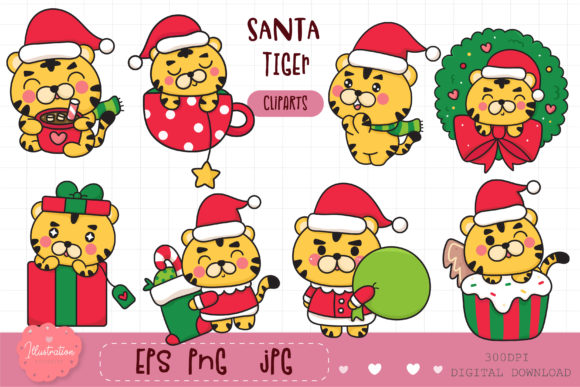
My first impression of the Cute Baby Tiger, Kawaii Christmas Santa set was one of immediate warmth and approachability. The style leans heavily into the kawaii aesthetic, characterized by soft lines, exaggerated features, and a playful innocence that instantly lowers the viewer's guard. For a local business, this mood is invaluable. It suggests a brand personality that is friendly, community-focused, and perhaps a bit whimsical. This is not an asset for a cold, corporate law firm or a ultra-minimalist luxury tech brand. Instead, it feels perfectly suited for a handmade business selling artisanal soaps, a boutique bakery launching seasonal cookies, or a children's clothing store looking to add charm to their holiday packaging.
Strategic Applications for Local Retail and Packaging
The true value of any design asset lies in its versatility. In my review, I mapped out several practical ways the Cute Baby Tiger, Kawaii Christmas Santa could be deployed across a real-world project. For packaging design, these illustrations work exceptionally well as hero graphics on box lids or as central focal points on product labels. Imagine a limited-edition honey jar from a local apiary; placing this tiger character on the label instantly communicates a gift-ready status without needing excessive text.
Beyond the primary package, the utility extends to the unboxing experience. These images are ideal for printable design elements like thank-you cards, hang tags, and stickers included in shipment boxes. For social media managers, the assets provide ready-made content for social media graphics, such as Instagram stories announcing a holiday sale or Facebook headers promoting a seasonal bundle. When used in marketing visuals, the character acts as a brand mascot, creating a consistent thread through email newsletters, website banners, and promotional ads.
Elevating Brand Perception and Customer Trust
Why does a specific illustration matter so much? In the crowded marketplace of commercial design, visual consistency builds trust. Integrating the Cute Baby Tiger, Kawaii Christmas Santa into a cohesive system supports a stronger first impression. When a customer sees the same charming character on a flyer, the product mockup online, and the physical product label, it reinforces professional branding. It creates a clearer visual hierarchy, guiding the customer's eye to the most important information while wrapping it in an emotional connection.
This emotional resonance is crucial for boutique visuals and handmade sellers. Customers often buy from small businesses because they want a story and a connection, not just a commodity. A well-placed illustration can make a product feel more personal and cared for, leading to better shelf appeal in physical stores and higher engagement rates on digital platforms. It transforms a generic item into a curated gift.
Ideal Use Cases and Strategic Limitations
While the Cute Baby Tiger, Kawaii Christmas Santa set is powerful, it is not a one-size-fits-all solution. It works best where the goal is to evoke joy, nostalgia, or playfulness. It shines in seasonal packaging, decorative brand elements, and as accent pieces in editorial design for lookbooks. However, caution is required. This style should be avoided in formal corporate branding or areas requiring strict legibility, such as ingredient lists or legal disclaimers on product labels.
Furthermore, designers must be wary of using these busy, detailed illustrations on very small labels where the lines might blur during printing. They can also compete with important text if the layout is too crowded. For luxury minimalist brands that rely on negative space and stark typography, this kawaii style might feel too cluttered or juvenile. It is essential to ensure the decoration supports the message rather than drowning it out, especially on low-contrast backgrounds.
Practical Notes for Professional Implementation
Before integrating the Cute Baby Tiger, Kawaii Christmas Santa into a client project, I always follow a rigorous testing protocol. First, test the asset on real product mockups to see how it interacts with physical textures like kraft paper or glossy plastic. Check its usage in black and white to ensure it retains its shape without color reliance. Preview the design on small labels to confirm that the fine details of the tiger's fur or Santa's hat do not vanish at reduced sizes.
Typography pairing is another critical step. Test the illustration beside various font styles—perhaps a rounded sans serif font for a modern look, a script font for elegance, or a chunky display font for maximum playfulness. Avoid pairing it with overly rigid or traditional serif fonts unless you are aiming for a specific ironic contrast. If the asset is available as an SVG design or vector file, inspect the editability to ensure you can recolor it to match specific brand palettes. For raster files, review the PNG design transparency to avoid ugly white boxes around the character.
Finally, and most importantly, always confirm the commercial license before using any clipart or illustration for client work or physical product sales. Whether sourced from a creative marketplace or a direct portfolio, ensuring you have the rights for commercial design protects both the designer and the business owner. With the right preparation, the Cute Baby Tiger, Kawaii Christmas Santa can be the cornerstone of a delightful and successful holiday branding campaign.