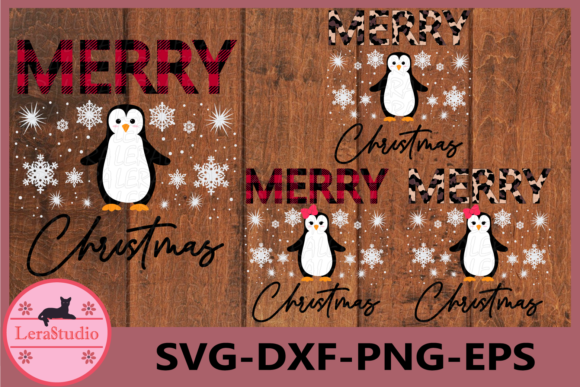
Merry Christmas, Penguin: Festive Illustrations
As a brand designer who spends most of my year refining identities for local bakeries, boutique skincare lines, and artisanal food producers, I am always on the hunt for graphic design assets that strike the perfect balance between whimsy and professionalism. When I first opened the file for Merry Christmas, Penguin, my immediate impression was one of genuine warmth. This isn't just a generic holiday clip; it is a character-driven piece that exudes a friendly, handmade, and playful personality. For small business owners looking to inject some seasonal charm into their brand identity without sacrificing quality, this illustration offers a fantastic starting point.
The mood created by Merry Christmas, Penguin is distinctly approachable. It suggests a brand that values community, joy, and a touch of nostalgia. While it might not fit a ultra-luxury minimalist perfume line or a stark corporate law firm, it is absolutely perfect for a local coffee shop launching a winter blend, a children's clothing boutique, a handmade soap business, or a family-owned bakery. The style feels organic and soft, making it an ideal candidate for businesses that want to appear accessible and heartwarming during the holiday rush.
Transforming Local Branding with Seasonal Charm
In the context of real-world application, the versatility of this asset is where it truly shines for small business branding. Imagine a local candle brand preparing for their December drop. Using Merry Christmas, Penguin as the hero graphic on their product label instantly creates a stronger emotional connection with the customer. It transforms a simple wax vessel into a giftable item that tells a story. Similarly, for a food business, this illustration can serve as a delightful accent on packaging design, perhaps adorning a box of holiday cookies or a bag of roasted nuts.
Beyond physical products, the utility extends to digital and promotional realms. Social media managers can utilize this illustration to create engaging Instagram stories or Facebook headers that announce seasonal sales. It works beautifully on thank-you cards included in online orders, adding a personal touch that improves customer trust and encourages repeat business. Whether used on hang tags for a clothing store, stickers for a florist, or as a decorative element on a menu graphic for a cafe, the asset supports a more polished marketing visual strategy.
The key to leveraging Merry Christmas, Penguin effectively lies in understanding how it enhances visual hierarchy. When placed correctly, it draws the eye without overwhelming critical information like pricing or ingredients. It acts as a visual anchor that guides the customer through the design, ensuring better product recognition on crowded shelves. For local business owners competing with big-box retailers, this kind of distinct, character-based imagery helps carve out a unique space in the consumer's mind.
Strategic Placement for Maximum Impact
To get the most out of this graphic design asset, one must be strategic about placement. It works best as a focal point on product mockups, where the white space allows the penguin character to breathe. It is excellent for seasonal packaging accents, such as a belly band around a gift box or a topper on a cup sleeve. For boutique visuals, incorporating it into window displays or in-store signage can create a cohesive festive atmosphere that invites foot traffic.
However, caution is required. This asset should be used carefully in formal corporate branding contexts where a serious tone is mandatory. Furthermore, designers must avoid placing it on very small labels where details might get lost during printing, or in ingredient-heavy layouts where it could compete with legal information. It is also not suitable for luxury minimalist brands that rely on typography alone, nor should it be placed on low-contrast backgrounds that obscure its features. The goal is to ensure the decoration enhances, rather than distracts from, the core message.
Practical Notes for Professional Execution
Before integrating Merry Christmas, Penguin into a client project or a handmade business product line, there are several technical steps I recommend. First, always test the asset on real packaging mockups to see how it interacts with your specific material textures, whether that is kraft paper, glossy plastic, or glass. Check its usage in black and white to ensure it retains its integrity for monochrome printing options, which are common in cost-effective commercial design.
Preview the illustration on small labels to confirm legibility. If you are working with a Canva template or other design software, test how the penguin looks alongside your chosen typography. Does it pair well with a bold sans serif font for a modern look, or does it sing when paired with a handwritten script for a rustic feel? Experimenting with serif, display, and script fonts will help you find the perfect typographic match. Additionally, if the file comes in SVG or vector formats, inspect the editability to ensure you can recolor elements to match your specific brand palette.
Finally, and perhaps most importantly, always confirm the commercial license before using any design assets for physical product sales or client work. Ensuring you have the rights for product label use and mass production is critical for avoiding legal issues down the line. By treating Merry Christmas, Penguin not just as a cute image but as a strategic component of your professional branding, you can elevate your seasonal campaigns and deliver a memorable experience to your customers.
In conclusion, for creative entrepreneurs and marketers looking to refresh their marketing visuals this season, this illustration offers a robust solution. It bridges the gap between festive fun and professional presentation, providing the necessary tools to create stronger first impressions and more consistent brand identities. Whether for a digital product cover, an editorial design layout, or a web design banner, Merry Christmas, Penguin stands out as a valuable resource in the modern designer's toolkit.