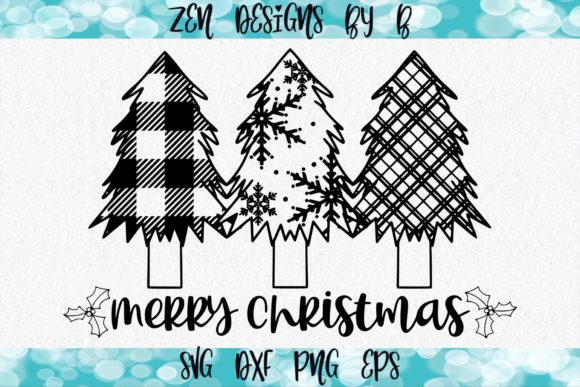
Review: Christmas Silhouette Trees for Holiday Embroidery
As a designer who spends more time staring at stitch maps than most people spend looking at actual trees, I approach every new machine embroidery design with a mix of hope and skepticism. We've all been there: you download a file that looks crisp on the screen, only to find it turns into a bird's nest of thread breaks and puckering once it hits the hoop. That is why I took a close look at the Christmas Silhouette Trees collection before committing it to any client projects or holiday inventory. This isn't just about whether it looks cute; it's about whether it holds up under the pressure of real-world production.
The First Impression: Mood and Visual Personality
When I first loaded the Christmas Silhouette Trees preview into my viewer, the immediate takeaway was its versatility. Unlike some holiday motifs that rely heavily on intricate internal detailing or heavy saturation, these designs lean into the power of negative space. The silhouette style offers a clean, graphic quality that feels modern yet timeless. It creates a cozy, nostalgic mood without screaming "novelty item," which is crucial if you are aiming for boutique-quality handmade products rather than craft fair leftovers.
The layout of these Illustrations suggests a thoughtful approach to stitch flow. In my experience, silhouette designs live or die by their edge definition. If the running stitch or satin stitch borders aren't smooth, the whole shape loses its integrity. From what I can see, the line work here appears deliberate, avoiding those jagged stair-step effects that plague low-quality digital embroidery files. This makes them an excellent candidate for projects where clarity is key, such as logos on apparel or minimalist home decor.
Real-World Application: A Case Study in Custom Apparel
To truly test the viability of this design, I imagined a specific scenario that many of us face every December: a rush order for custom sweatshirt embroidery for a local family reunion. The client wanted something elegant that wouldn't look childish on adult garments. Here is where Christmas Silhouette Trees shines. Because the design relies on shape rather than complex color blending, it translates beautifully onto heavier fabrics like French terry or fleece.
I visualized placing a cluster of these trees on the left chest of a navy blue sweatshirt. The contrast would be sharp, and the lack of dense fill stitches means the garment remains soft and wearable. For an Etsy seller or small shop owner, this is gold. You aren't just selling a shirt; you are selling a piece of art that doesn't feel stiff or scratchy. Furthermore, the simplicity of the silhouette allows it to scale well. Whether you are stitching a tiny version on a baby onesie or a large statement piece on a tote bag design, the core identity of the image remains intact.
Where Caution is Required
However, no design is perfect for every situation. While the Christmas Silhouette Trees are robust, there are specific contexts where you need to proceed with care. If you are working with highly textured fabrics, like a chunky knit sweater or a waffle-weave towel, the fine details of a silhouette might get lost. The needle needs a smooth path to create that crisp outline. Similarly, if you are attempting this on a curved surface like a cap, you must be mindful of the hoop size and the distortion that occurs near the seams. A tall, slender tree might warp if not centered perfectly on the crown.
Another consideration is fabric color. While silhouettes are traditionally dark on light, reversing this for a personalized gift on dark fabric requires careful thread selection. You need a thread with enough sheen and coverage to stand out against the background without looking washed out. Always test your thread colors on scrap fabric first. What looks vibrant on the spool might disappear once stitched into a dense area.
Impact on Brand and Product Value
In the world of commercial embroidery, consistency is everything. Using a cohesive set of design assets like Christmas Silhouette Trees helps build brand recognition. If a customer buys a pillow cover from you in October and a tea towel in December, having a unified visual language makes your small shop product line feel professional and curated. These designs add value because they elevate the perceived quality of the finished product. They don't look like clip-art; they look like intentional design choices.
For those creating printable mockups to sell digital previews or market their physical goods, the clean lines of these illustrations render exceptionally well. They provide a clear representation of what the final stitch-out will look like, reducing the gap between customer expectation and reality. This transparency builds trust, which is the currency of any successful craft business.
Practical Notes for the Working Designer
Before you commit to a full production run, here are a few technical checks I recommend based on my review process:
- Stabilizer Selection: Even though silhouettes often use less thread, do not skimp on stabilizer. For stretchy fabrics like t-shirts, a cut-away stabilizer is non-negotiable to prevent the design from distorting over time.
- Stitch Density Check: Review the density settings in your software. If the design feels too light, it might look sparse on thick fabrics. If it's too dense, it could cause puckering on lighter materials.
- Corner Inspection: Zoom in on the tips of the trees and any sharp angles. Ensure the machine isn't expected to make impossible turns that lead to thread bunching.
- Licensing Verification: Always confirm the license terms before selling items made with Christmas Silhouette Trees. Some designers allow unlimited physical sales but restrict digital redistribution.
- File Format Compatibility: Ensure you have the correct embroidery file format for your specific machine model to avoid conversion errors that can alter stitch paths.
Ultimately, the Christmas Silhouette Trees design set offers a strong foundation for holiday creativity. It balances aesthetic appeal with practical stitchability, making it a reliable choice for both hobbyists and professionals. By understanding its strengths and respecting its limitations regarding fabric choice and placement, you can create stunning holiday embroidery that customers will cherish for years. It is a reminder that sometimes, the simplest shapes make the deepest impression.