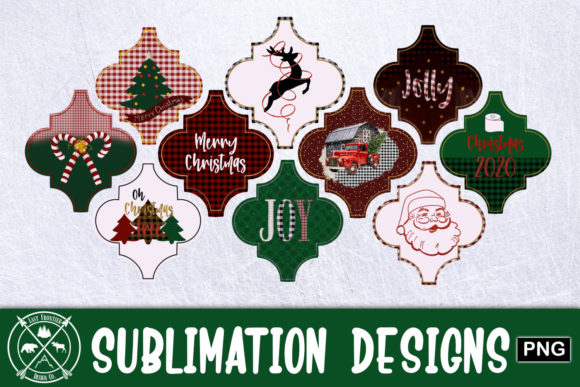
Reviewing Arabesque Christmas Tile Sublimation for Holiday Projects
As a designer who spends more time staring at stitch maps than actual holiday lights, I approach every new machine embroidery design with a mix of curiosity and skepticism. When I first pulled up the Arabesque Christmas Tile Sublimation file on my screen, my immediate reaction was one of appreciation for its structural elegance. This isn't just another generic snowflake or Santa silhouette; it belongs firmly in the Illustrations category, offering a sophisticated, tile-like aesthetic that feels more like architectural art than typical seasonal clipart. For those of us running a craft business or managing an Etsy seller shop, finding assets that elevate a handmade product from "cute" to "boutique" is the holy grail. Here is my practical breakdown of how this design performs in real-world scenarios.
The Visual Personality and First Impressions
The mood created by Arabesque Christmas Tile Sublimation is distinctly refined. It avoids the childish clutter often found in holiday graphics, opting instead for a balanced, symmetrical layout that mimics traditional ceramic tiles or intricate ironwork. The visual personality suggests warmth and tradition without feeling dated. When evaluating the detail level, I noticed a thoughtful distribution of elements that should translate well into thread. However, because this is categorized under Illustrations, it relies heavily on clean lines and defined shapes. This makes it an excellent candidate for projects where clarity is key, such as a printable mockup for a high-end catalog or a digital embroidery file intended for visible branding.
Real-World Application: The Boutique Tote Bag Scenario
To truly test the viability of this design, I imagined a specific client request: a set of limited-edition holiday tote bags for a local boutique. The goal was to create a small shop product that customers would want to reuse year after year, not just a disposable gift bag. Arabesque Christmas Tile Sublimation fits this tote bag design concept perfectly. Its square or rectangular tendency (implied by the "tile" name) allows for a centered, statement placement on canvas or heavy cotton twill.
In this scenario, the design acts as a focal point. Unlike dense fills that can make a bag stiff, the open nature of an arabesque pattern likely utilizes a mix of satin stitch borders and strategic fill stitch areas, keeping the stitch density manageable. This ensures the finished product remains flexible and usable. If I were stitching this for a client, I would anticipate the geometric precision adding a layer of professionalism that justifies a higher price point. It signals to the buyer that thought went into the design assets, fostering greater customer trust and brand recognition.
Versatility Across Different Products
Beyond tote bags, this design shows promise for various custom apparel items. Imagine a sweatshirt embroidery project where the design is placed on the upper back or as a large chest pocket detail. The intricate lines of the arabesque style would look stunning against the soft texture of fleece, provided the thread colors offer enough contrast. It could also serve as a beautiful holiday embroidery accent on home goods like pillow covers or tea towels. For baby embroidery, one might need to scale it down significantly, perhaps using it as a motif on a blanket border, though care must be taken regarding the complexity of small details on soft, stretchy fabrics.
For commercial embroidery projects, such as corporate holiday gifts or uniform patches, the tile structure offers a contained shape that works well within standard hoops. An embroidered patch featuring this design could become a collectible item for a brand's loyal customers. The symmetry ensures that even if the placement isn't pixel-perfect, the design itself maintains a sense of order and balance.
Critical Considerations for Stitching Success
While the aesthetic appeal is high, practical execution requires vigilance. There are specific scenarios where Arabesque Christmas Tile Sublimation demands careful handling. First, consider the hoop size. If the design is large, it may require a jumbo hoop or a re-hooping strategy, which introduces alignment risks. On textured fabrics like terrycloth or heavy wool, the finer lines of the arabesque pattern might get lost or distort. In these cases, using a robust stabilizer is non-negotiable to prevent puckering and maintain the crispness of the tile edges.
Dark fabrics present another challenge. If the design relies on light-colored threads to define the pattern, stitching on black or navy material requires excellent coverage. You may need to adjust the underlay or increase the density of certain sections, though this should be done cautiously to avoid creating a stiff, cardboard-like feel. Additionally, curved surfaces like caps can be tricky for tile-based designs. The rigid geometry of a "tile" can look warped if stretched over the front panel of a hat. I would recommend testing this on a flat surface first before attempting a cap application.
Designer Notes for Optimization
Before committing to a production run, I always advise fellow designers to follow a strict testing protocol. First, stitch the design on a scrap piece of the exact fabric you intend to use. This reveals how the fabric texture interacts with the stitch types. Check the contrast of your thread colors; sometimes a design looks great on screen but lacks definition when stitched in similar tones. Review the stitch density specifically in the corners and tight curves of the arabesque swirls, as these are common break points.
It is also wise to view the design in a black-and-white mockup. This strips away the distraction of color and lets you see if the structural integrity of the pattern holds up. Does it look like a coherent image, or just a jumble of lines? Finally, confirm the licensing terms. While many files allow for personal use, selling finished products or digital embroidery files often requires a specific commercial license. Never assume; always verify to protect your craft business from legal issues.
Final Verdict on Value and Appeal
Ultimately, Arabesque Christmas Tile Sublimation stands out as a versatile asset for creators who value sophistication over flashiness. Its ability to enhance brand consistency and elevate the perceived value of a personalized gift makes it a strong contender for the upcoming holiday season. Whether used for a single appliqué design element or as the main feature of a complex embroidery project, it offers a professional finish that resonates with buyers looking for quality. By respecting the technical limitations of the fabric and machine, and by approaching the design with a critical eye for detail, you can turn this digital file into a tangible product that delights customers and strengthens your reputation as a skilled maker.